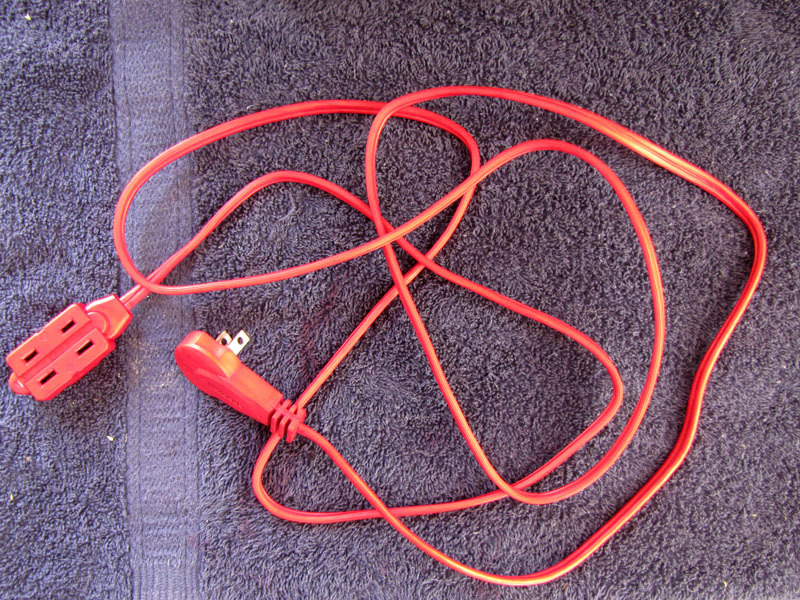








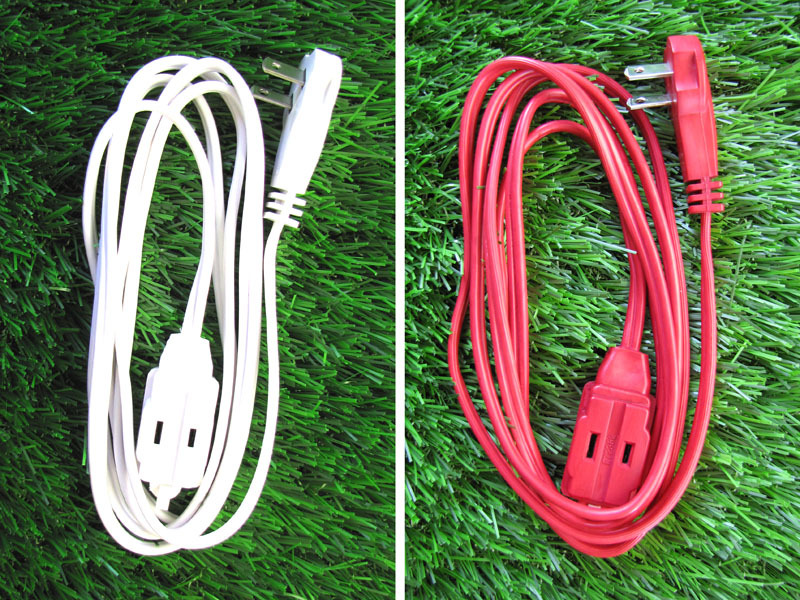
If you want an extension cord, power cord, or other plastic-insulated cable in an unusual color, and you can find one in white, there’s a good chance you can dye it to suit your preference using this technique.
Turns out many cables are sheathed with PVC, and will take the same oil-based stains as PVC pipe. If you want a purple cord, for instance, you can just treat a white PVC cord with purple primer. If you want some other color, it is easy to prepare your own custom stains from clear PVC cleaner and concentrated solvent dyes.
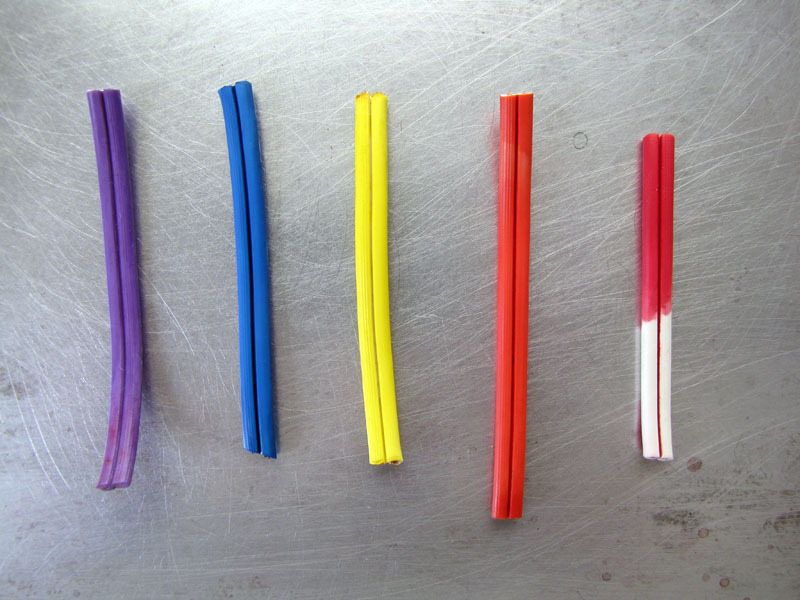
Like this:
Like Loading...
Step #1: Test the material
Next
- Not all plastic insulation will take this dye. Test a small piece of the insulation you want to stain before trying to do a whole cable.
- You can perform this test using hardware-store purple primer. If the material will take a purple primer stain, this technique will work.
Step #2: Prepare work area
Next
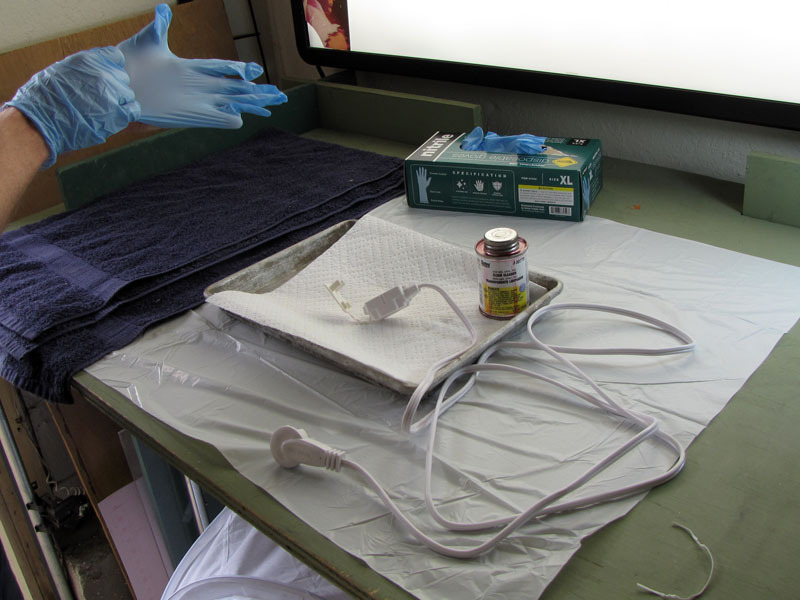
- Observe all safety warnings on the can of PVC cleaner or primer that holds your stain. Work in a well-ventilated area, away from open flame, and protect your skin with nitrile gloves.
- Lay a plastic garbage bag, painter's dropcloth, or other plastic sheeting over your bench top.
- Set a metal tray on top of the plastic sheet. I use an old aluminum cookie sheet measuring 12x18".
- Put two or three layers of paper towel on top of the metal tray.
- To one side, set a folded shopcloth, rag, or towel that you don't mind getting grubby. This will couch the cord while it's drying.
Step #3: Brush on rough coat
Next


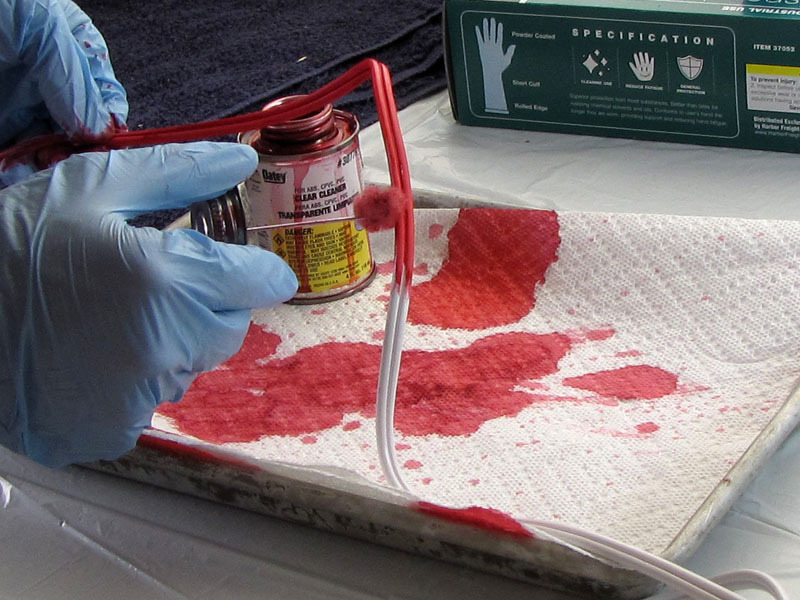
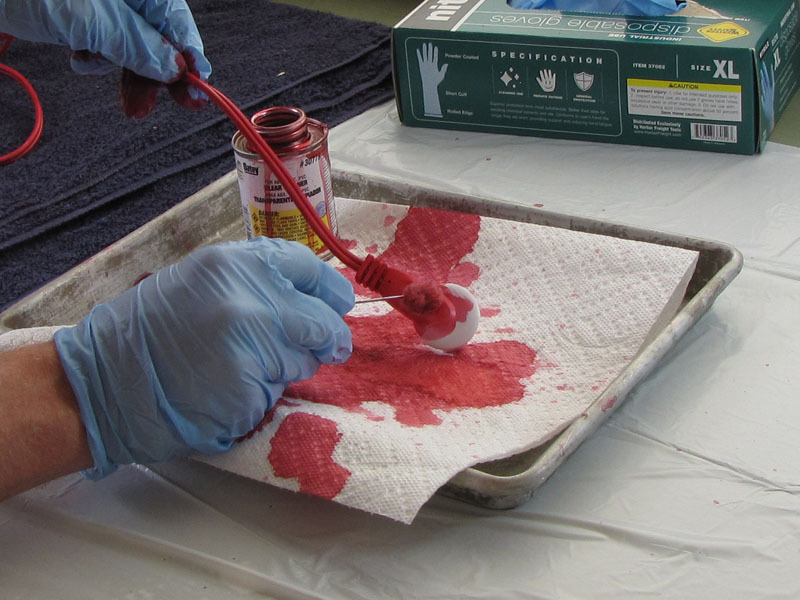
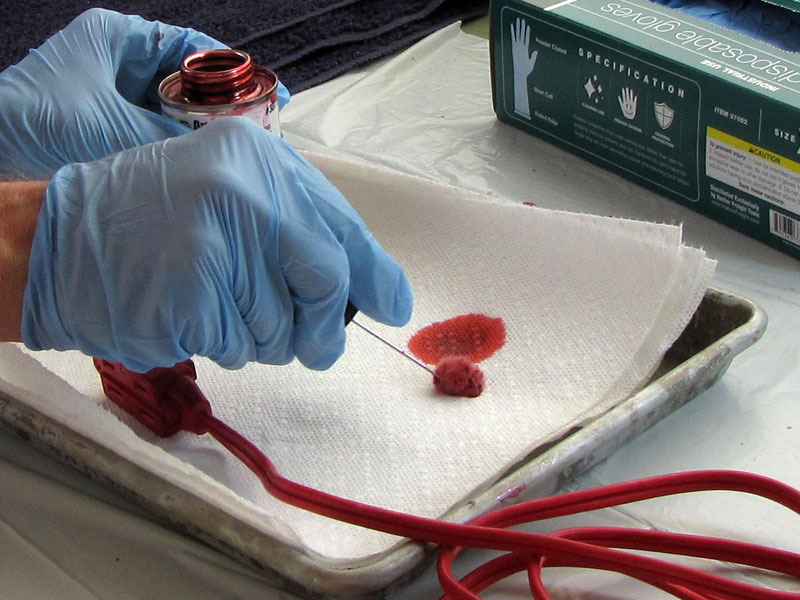
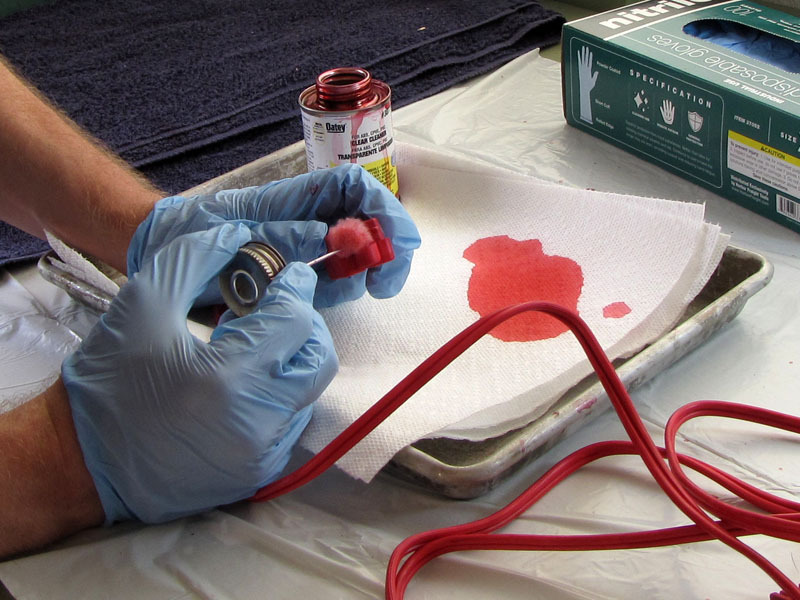
- Apply the stain to the cord, directly from the can, using the applicator built into the cap. Try to avoid letting it drip or pool on the cable itself.
- The stain dries very quickly. As each section of the cord dries, feed it to the side, onto the towel, and move on to the next section,
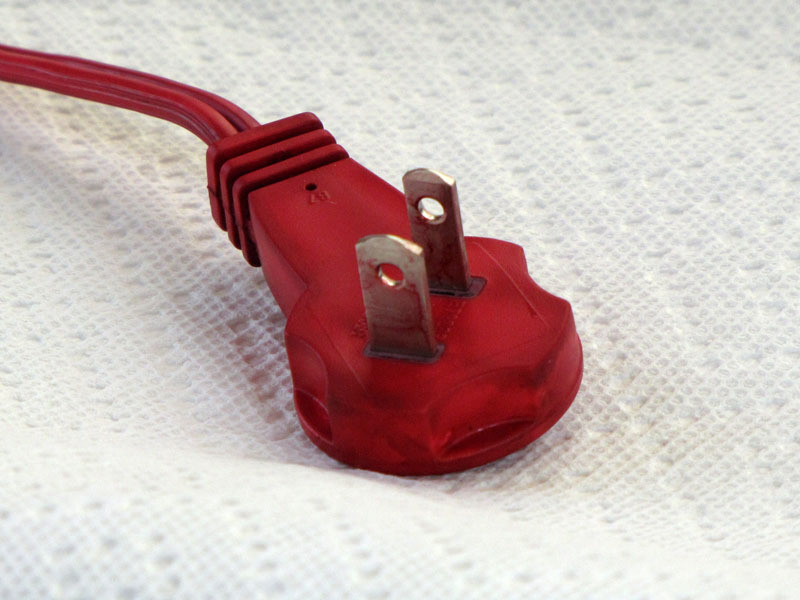
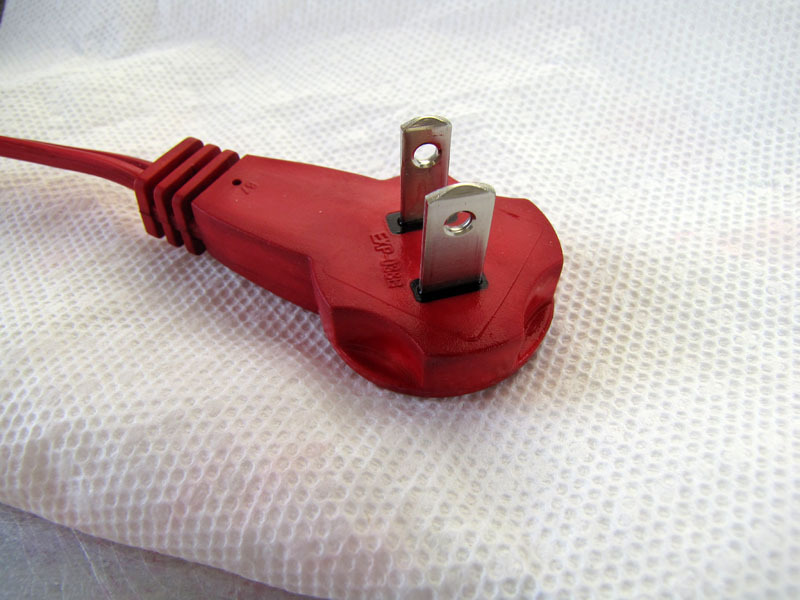
- Don't worry about getting stain on the metal prongs of the plug. The metal will not take the stain, and any that dries there is easy to clean off. See below.
Step #4: Let dry
Next
- Leave the cable undisturbed on the towel for at least half an hour, which should be more than enough time for the stain to thoroughly dry.
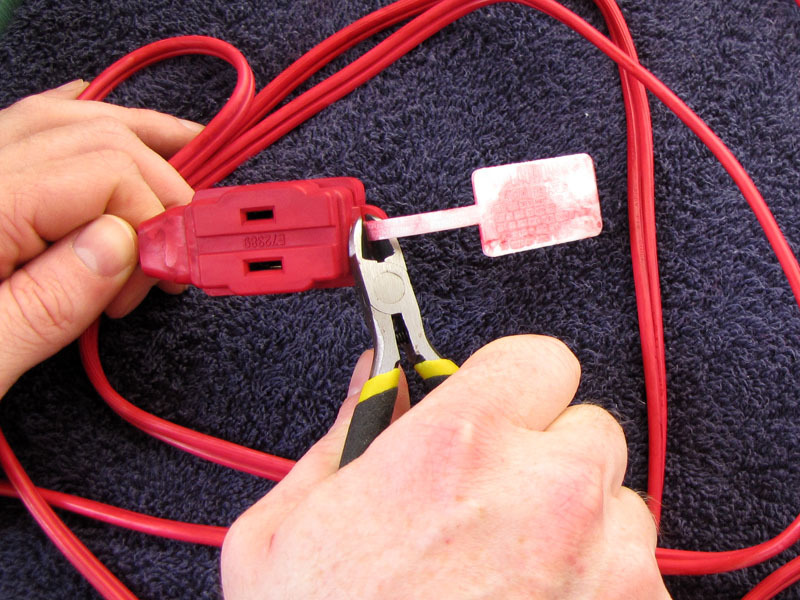
- The plastic child-safety clip on my extension cord was made of some different kind of plastic, that did not take the stain, so I just clipped it off with a pair of side-cutters.
Step #5: Touch up
Next


- For touch-up work, the applicator should be just slightly dampened with stain.
- Dip the applicator in the stain and daub it first against the inside of the can, and then at least once on a paper towel.
- Smooth over any light spots or splotches using the damp applicator. It may take a few strokes before the plastic softens and the color begins to even out.
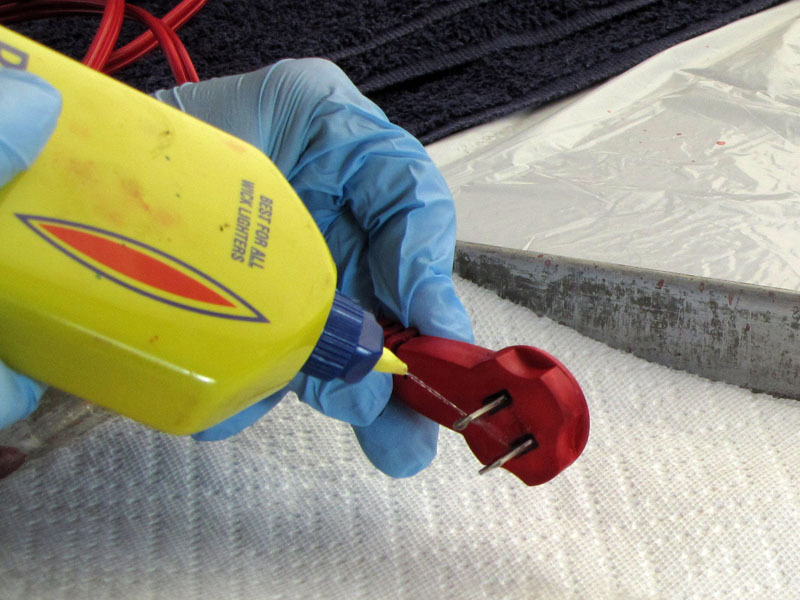
Step #6: Clean up metal parts
Next


- Plug prongs or other metal parts will not take the stain, and stray dye can be wiped off using a paper towel moistened with lighter fluid.
- Alternately, you can just wash metal parts in a stream of lighter fluid from the bottle. A small amount of dye may wash from adjacent plastic, but it should not be enough to noticeably affect the color.
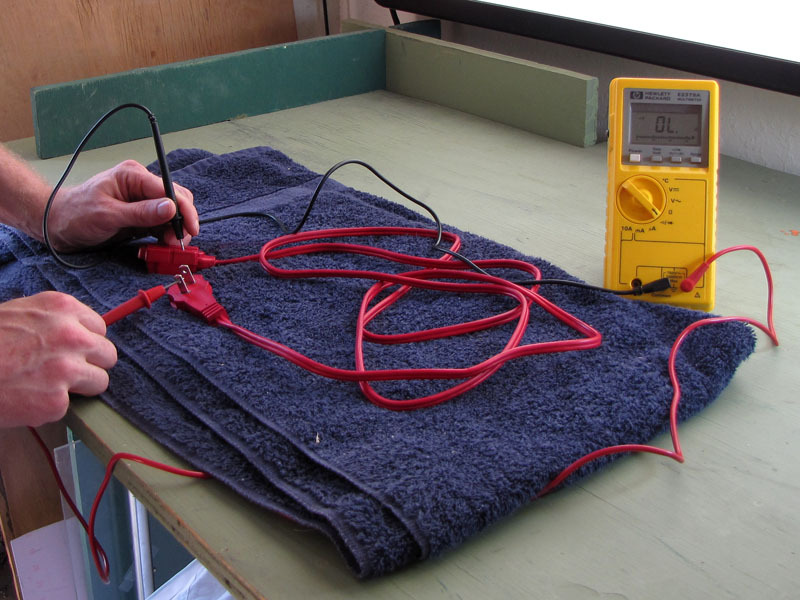
Step #7: Test cable

- Although it is unlikely that this technique will significantly affect the integrity of the insulation, you should err on the side of caution and carefully test the cable before using it.
- Set your multimeter to check continuity--most of them beep to indicate a closed circuit.
- Connect one probe to one contact at one end of the cable.
- Touch the other probe to the contacts at the other end of the cable and verify that there are no shorts.
Conclusion
When the stain is dry, it is quite clean. PVC stained using this technique will pass a "white glove test" and will not transfer color, under normal conditions, to materials that come in contact with it.
If you're feeling really adventurous, you might also try setting a coil in the cable before staining it.
At some point I hope to experiment with spray application of these stains.
Elizabeth, thanks for sharing this information. Are there pictures of your cord online someplace? I would love to see how it came out. Cheers – SMR
I posted pictures on my blog here: http://froggetscrafts.wordpress.com/2011/07/05/tie-dyeing-a-power-cord/
Enjoy!
Elizabeth
Thanks, Elizabeth! I’ve observed some fading, too, on the red cord, but not as severe as you describe. In the case of PVC pipe, my experience is that the fading is caused by exposure to sunlight or other UV light, and that some colors fade more than others. Light-fastness should vary with the particular dye molecules used to achieve a particular color. I have not observed fading from commercial “Purple Primer,” which I’m sure has been formulated using dye molecules that are more light-fast. The dyes that I used here are intended for colorizing organic solvents (e.g. diesel fuel or denatured alcohol) and thus are not intended to hold up to prolonged UV exposure. I’m sure light-fast versions of all these colors could be prepared if a person could get his or her hands on the right bulk dye molecules, but sourcing them in small quantities may be a bit of a challenge.
I dunno, but let’s see if we can figure it out. I guess you followed the instructions either here or in the magazine pretty closely. Did your dyes come from Narad marketing and/or are they called “Rekhaoil?” And is the substrate a piece of PVC pipe? Or is it a cord? Any info you can provide will be helpful. And if you have pictures, please feel free to send them to me directly at sean@makezine.com.
// What's Trending
Raspberry Pi Design Contest
Maker Faire: Day Two
Maker Faire: Day One
Seventeen Sneaky Secret Hides
10 Things to Connect to Your Raspberry Pi
DIY Hacks & How To’s: Swiss Army Key Ring
A Photo Tour of Maker Faire
Adam Savage Exhorts the Makers to “Work Hard and Work Smart”
// What's Shared
A better way to slice a pumpkin
DIY Nerf Darts
In the Maker Shed: Minty Boost USB Charger
100 Dollar Store Organization Ideas for Craft Rooms and Beyond
Mad’s Mouse House
Lace Princess Crowns
I Have a (Puzzling) Dream
Play the Rings of a Tree Trunk Like a Record
// Most Commented
DIY Hacks & How To’s: Get Emergency Power from a Phone Line
Resin Casting: Going from CAD to Engineering-Grade Plastic Parts
Ten Tips for Screws and Screwdrivers
Ten Tips for Better Measurement
Makers on TV: Big Brain Theory
Arduino Announces New Wireless Linux Board
Grow: A Portable CNC Router System
Pitches with Prototypes: Solar Tracker