Make: Projects
Gravity Catapult
Get medieval with this portable, stowable, gravity-powered trebuchet.
I have long been enamored of catapults. Invented around 400 B.C., they were used until nearly A.D. 1300. So for 1,700 years, catapults were arguably the largest, most expensive, and most powerful machines on the planet.
Today, people build catapults for fun: Scout troops, historical reenactors, fathers and daughters, beer-stoked college students. Having built more than a few, I’ve found it’s not nearly as easy as it might appear.
First, for any projectile larger than a golf ball, catapults have to be big, and building big things can be a challenge in terms of cost and tools.
Second, there are incredible stresses at work within the moving parts of a catapult. Unless good designs and materials are used, wooden support beams break, rods bend, and joints collapse in ways unexpected and sometimes even dangerous.
Third, they are big. Did I already say that? Well, it bears repeating because once you build the thing, you need space to use and store it. I’ve learned that finding a place to store a catapult is a huge pain — very few people are willing to park their cars in the driveway to free up garage space for their catapults, no matter how much they love to hurl.
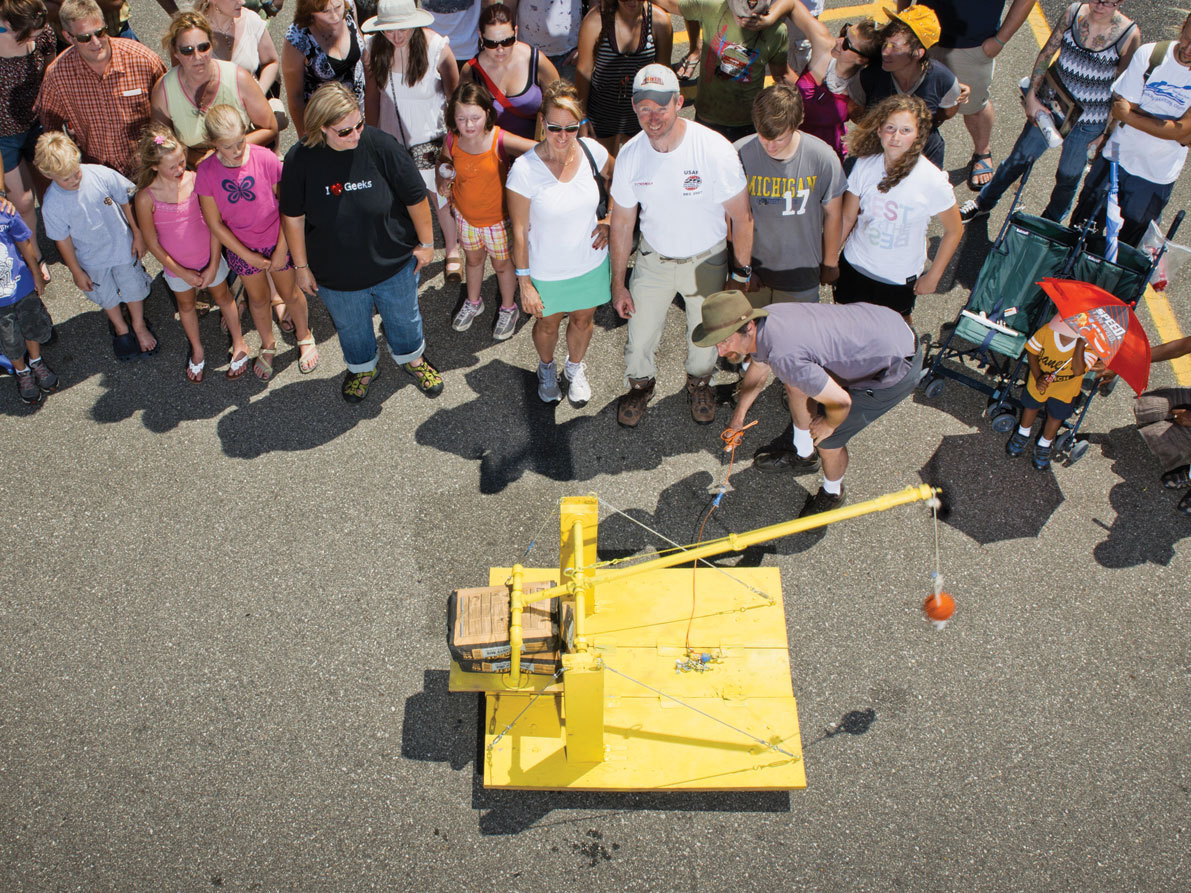
This gravity-powered catapult is fairly simple to build using a minimum number of tools. Built with modern materials instead of medieval timbers, it’s small and light enough for one person to push around. Best of all, it rolls around on wheels and folds flat (sort of) so it can be stored in a fraction of the space needed for traditional catapults.
While the Folding Catapult is customizable, don’t get carried away — 120lbs is about the maximum counterweight that can be used.
Steps
Step #1: Build the folding deck.
Next


- Using a table saw, or better yet a panel saw, cut out the plywood parts from a 4'×8' sheet of ¾"-thick plywood, referring to the Cutting Diagram (click to enlarge).
- If you don’t have a table saw, don’t despair — most lumberyards will cut the pieces for you at little cost when you buy the wood. You could also use a handheld circular saw.
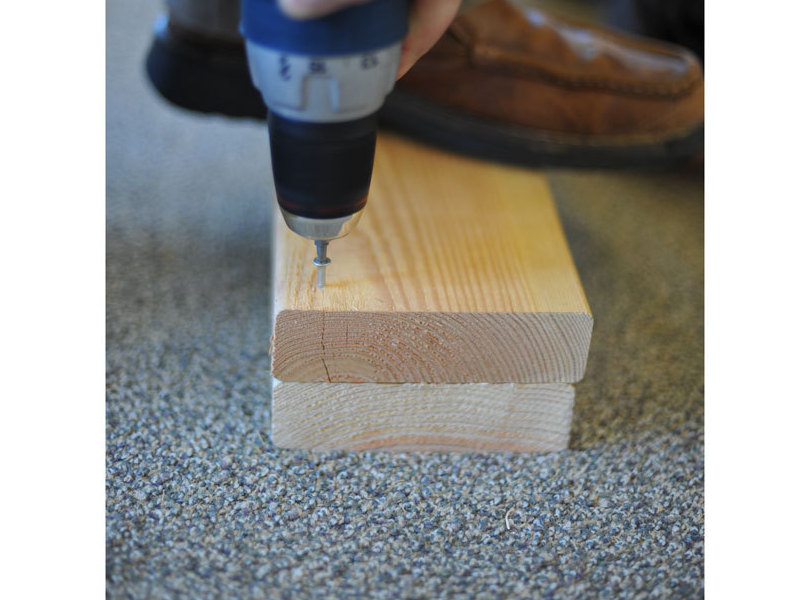
- Use the 1¼" deck screws to fasten the reinforcing plates to the deck, following the Folding Deck Layout Diagram.
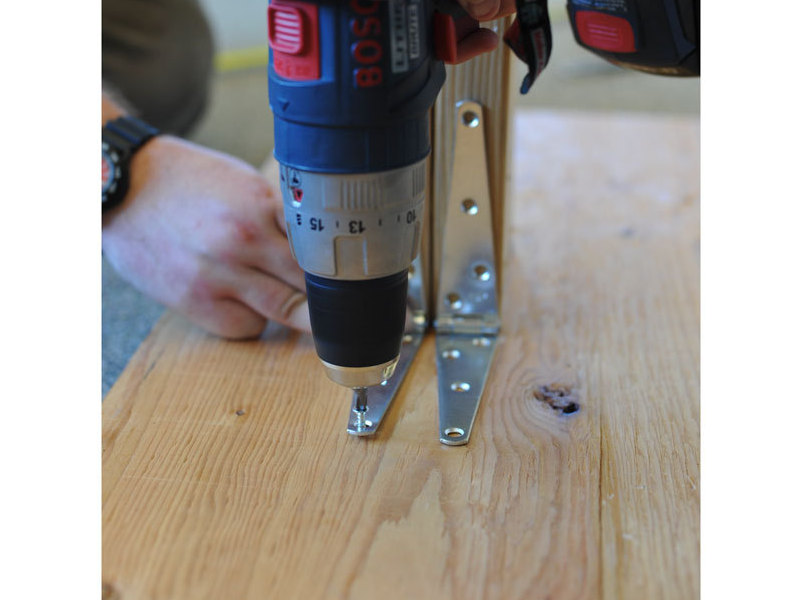
- Using an electric drill, mount the door hinges to the deck with their mounting screws (or ¾" flathead wood screws).
Conclusion
Safety Notes
- Keep all body parts away from the throwing arm’s swing area at all times.
- Warn downrange bystanders of possible incoming projectiles.
- Use care when pushing the catapult.
- Don’t step or stand on the deck.
- Remember that all hinges are pinch hazards. Keep hands and feet clear when folding.
Ready...
To move the catapult, fold the prop board up and twist the L-hook to keep it in place. Push the catapult to a location with at least 150' of open space to hurl, with no nearby vulnerable targets, such as people, pets, or vehicles. Place the prop board in the down position.
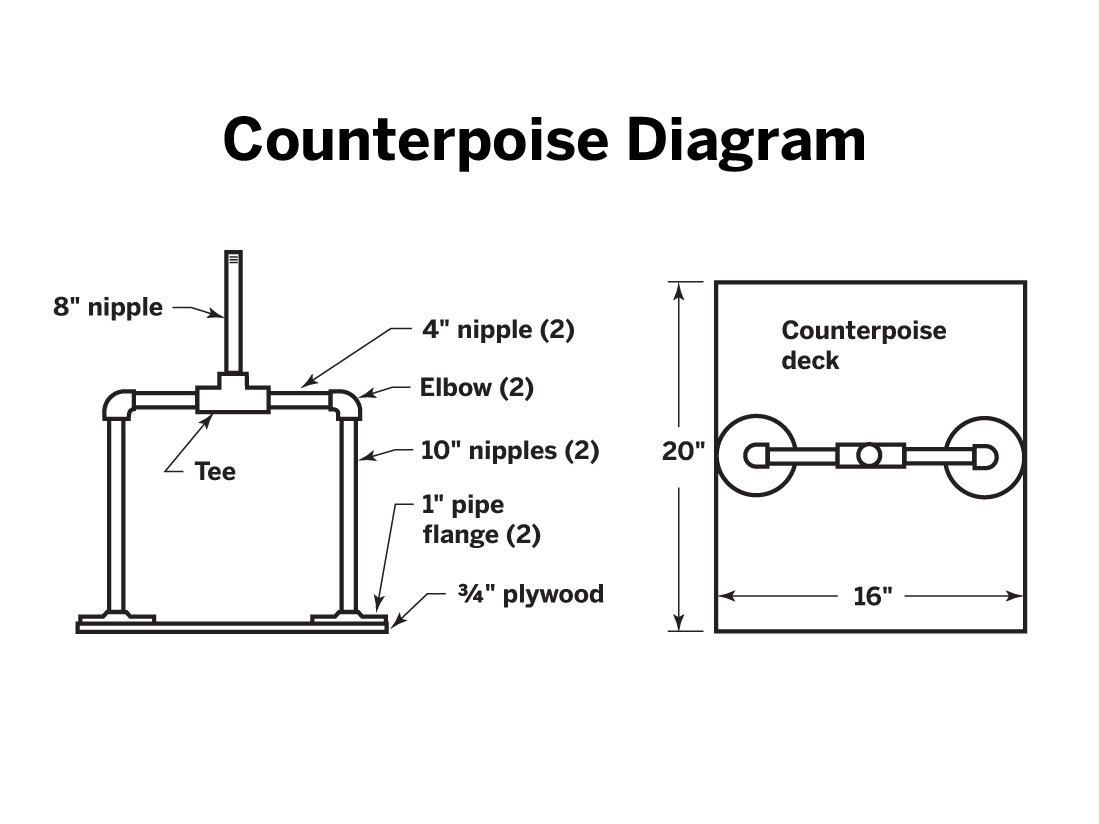
Place up to 120lbs of weight on the counterpoise deck. (Two 60lb bags of concrete mix fit quite well.) If desired, attach two 18" bungee cords to the deck and counterpoise. This will increase the machine’s range and capacity.
WARNING: Don’t trust the panic snap to hold the arm. Have a helper hold the arm while you latch it, and keep your head and other body parts out of the arm’s arc at all times.
Aim...
Point the catapult at the target. Pull the arm down. Latch the panic snap to the firing ring.
Attach a rope or cord to a soft, lightweight test item (plastic dog toys are a good choice). Determining the optimum length of the sling is done through trial and error. Start with a sling length 1/3 the length of the throwing arm and work from there. Be aware that too short a sling will hurl the projectile backward.
Tie a nontightening loop in the free end of the sling (a bowline is perfect) and place the loop over the ¼" bolt protruding from the pipe cap. Center the projectile on the center deck.
Fire!
Make sure the area in front and in back of the catapult is clear. Step 8 or 9 paces to the side. Grasp the cord and pull smartly to release the panic snap. The throwing arm will rotate and hurl the projectile toward the target.
You can optimize performance by making the sling longer or shorter, making the firing pin smoother or rougher, and adding or removing weight from the counterpoise.
Store It
The Folding Catapult is designed for easy storage. First, remove the weight from the counterpoise deck.
Loosen the turnbuckle on the throwing arm, then loosen and remove the pipe unions on the throwing arm pivot. Remove the throwing arm. Finally, unscrew the pivot assembly pipe stubs from the flanges on the uprights.
Unscrew and remove the counterpoise assembly from the cross fitting.
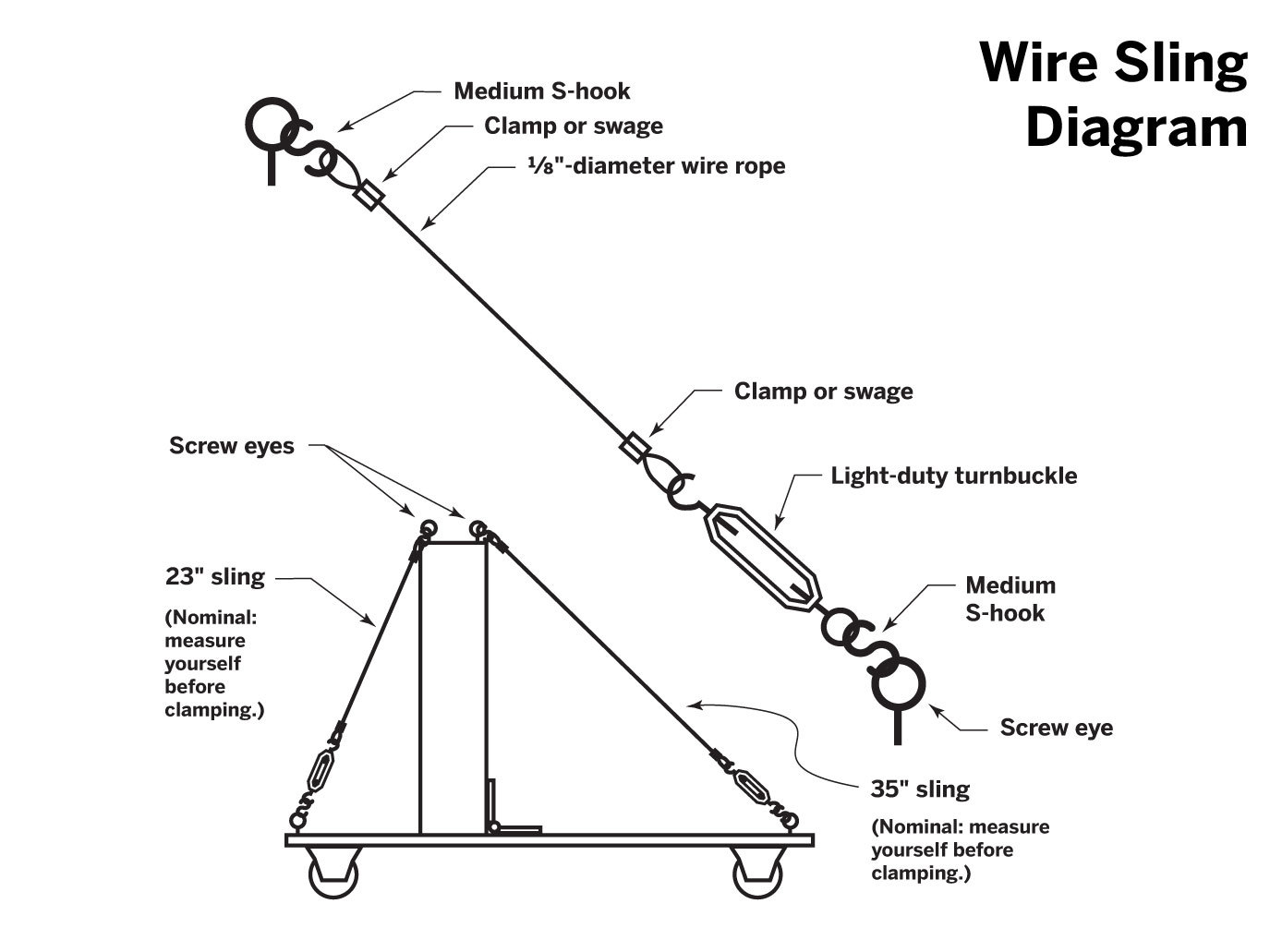
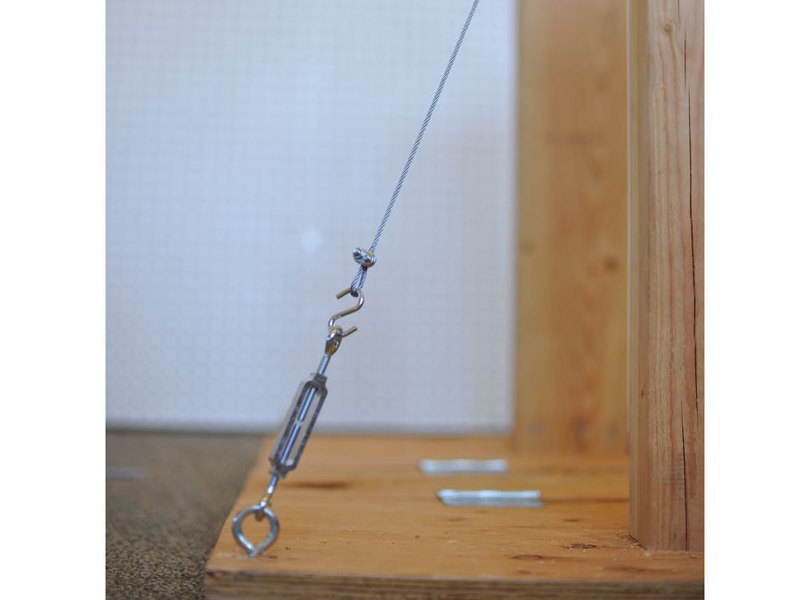
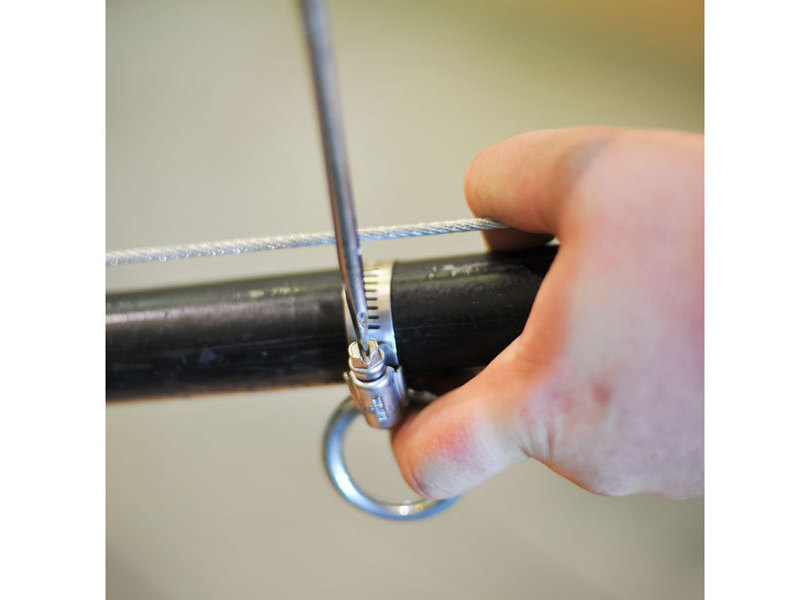
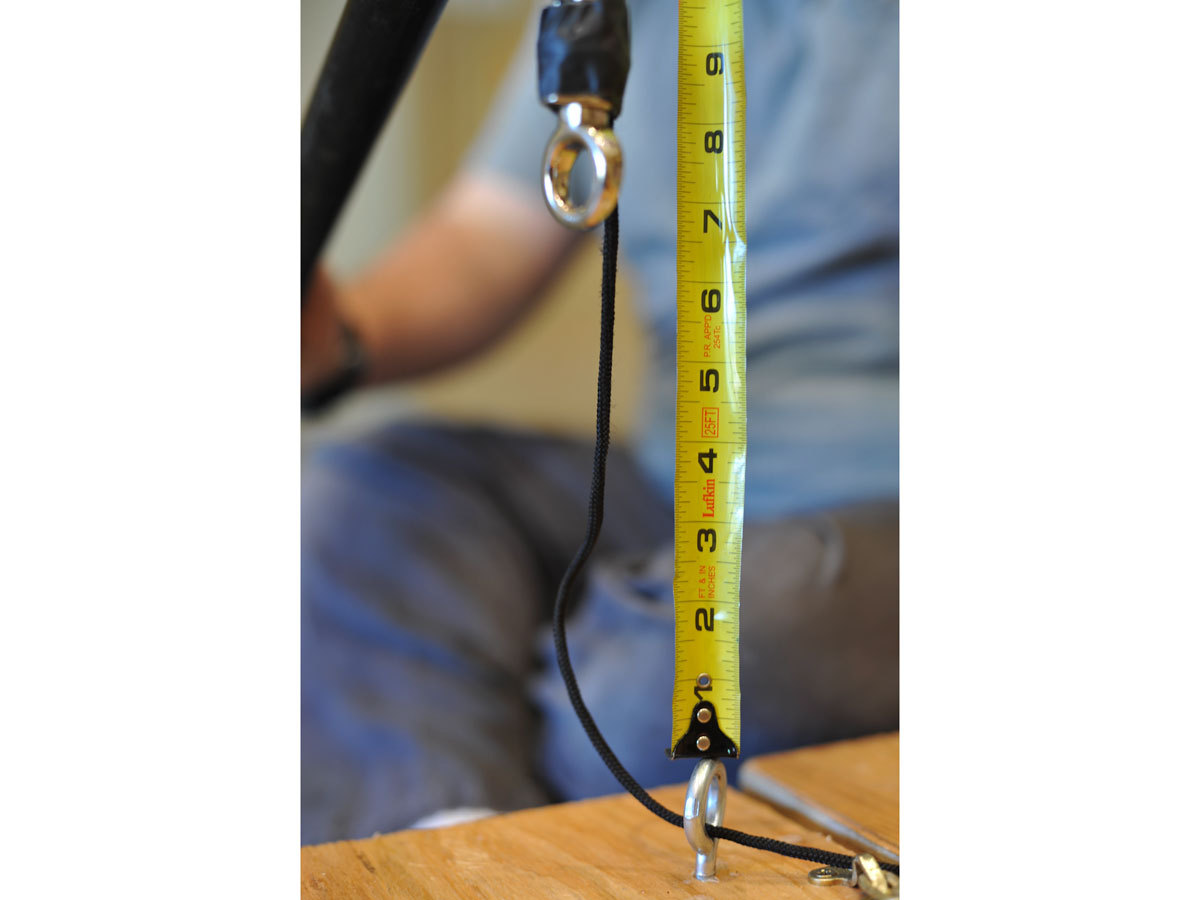
Loosen turnbuckles and remove the guy wires from the screw eyes, making sure to collect all loose S-hooks. Fold the uprights, and then fold the deck for storage.
This project first appeared in MAKE Volume 28, page 84.