









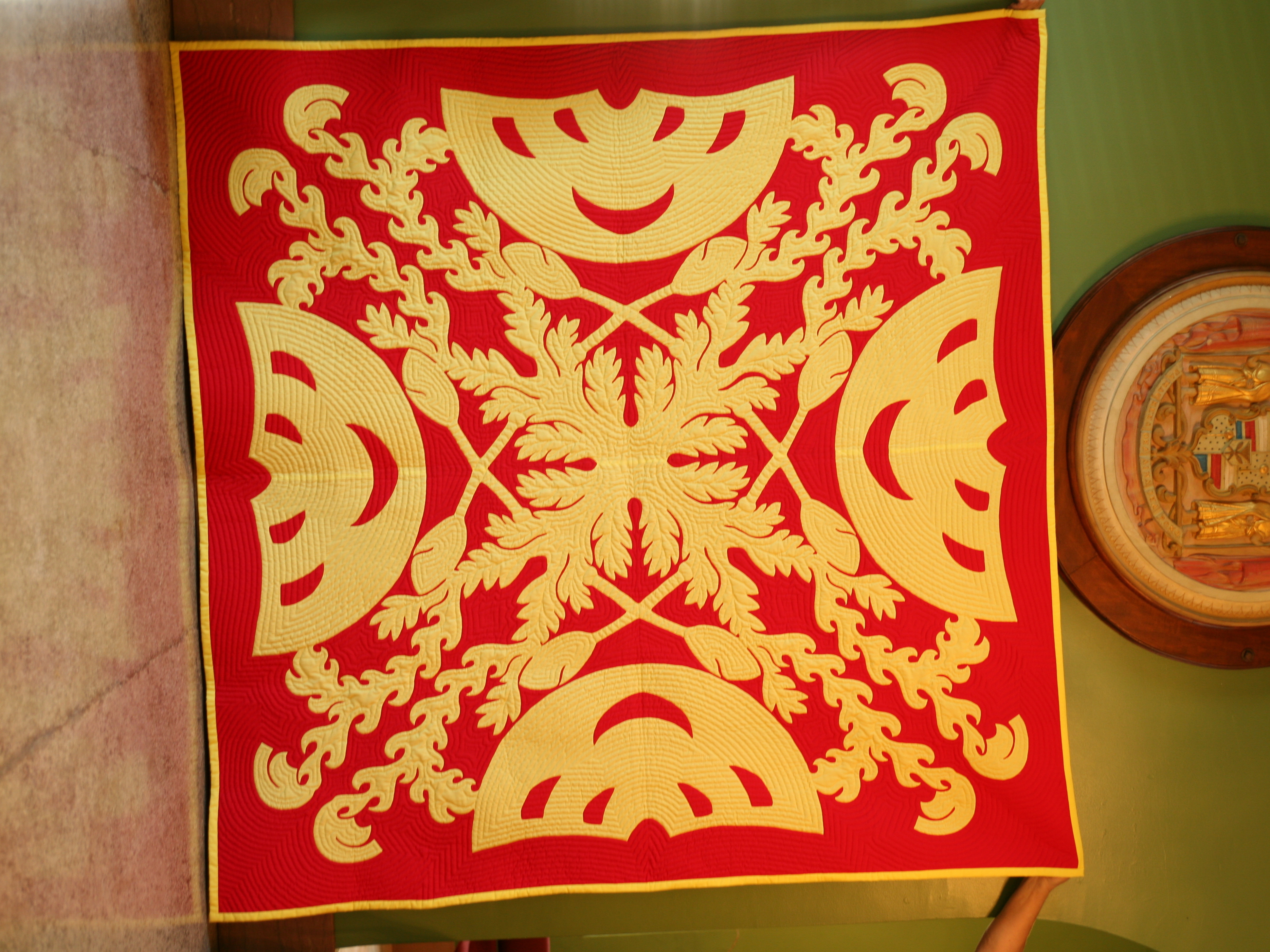

A Hawaiian quilt is one of Hawaii’s cherished heirlooms, passed down through generations of families to tell the story of the quilter, the designer, and the receiver. Traditional designs include papayas, breadfruit, ti leaves, and taro roots, but can be anything that illustrates a love for nature, traditions, legends, or events.
I recommend that you explain your intentions to the person you’re making the quilt for, because we believe that if the receiver experiences the quilting process with you, they know that the quilt was designed with love, created with love, and given with love.
I remember during family gatherings and celebrations how my mother would carefully remove all of the quilts from the closet and place them gently on the beds in each bedroom. She would softly touch and sometimes hug the quilts as if they possessed some kind of magical power and spirit.
One day I asked her why she always displayed the quilts during these gatherings, and she told me that all of the quilts we owned were made by someone special, both family members and friends. She said during the family gatherings the quilts are displayed so that when people look at the quilt they not only admire the quilt, but they always remember the person who made it, making that person a part of the celebration.
She taught me that pictures are not the only form of remembrance — so are the quilts. One day when I’m long gone from this world and my quilt is displayed in the home, I too will be remembered.
The beautiful quilt pictured here was quilted and appliquéd by Doris Shibuya and designed by John Serrao. Design: The royal Symbols of the first King of Unified Hawaii.